
Introduction
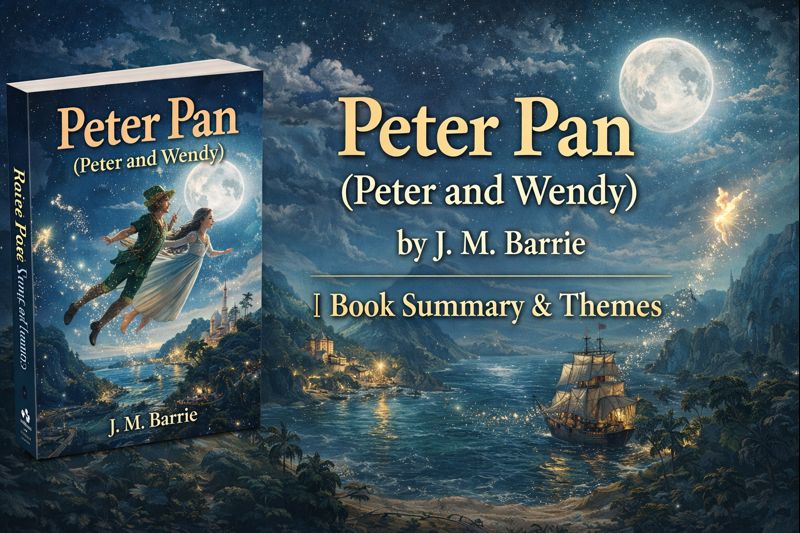
Peter Pan: Peter and Wendy is a classic novel written by J. M. Barrie and first published in 1911. The story is widely known for its magical elements, unforgettable characters, and its central idea of eternal childhood. However, beneath its whimsical surface, Peter Pan explores deeper themes such as growing up, identity, memory, and the tension between freedom and responsibility.
This book summary provides a detailed and original analysis of the novel, highlighting its main plot, characters, and enduring themes that continue to resonate with readers of all ages.
About the Author: J. M. Barrie
James Matthew Barrie (1860–1937) was a Scottish novelist and playwright best known for creating the character of Peter Pan. Barrie’s writing often reflects nostalgia for childhood and a complex emotional view of adulthood. His personal life and close relationships with children strongly influenced Peter Pan, giving the story its emotional depth and bittersweet tone.
Book Overview
The story begins in London, where Wendy Darling lives with her younger brothers, John and Michael. Peter Pan, a mysterious boy who can fly and never grows up, visits the Darling children late one night. With the help of fairy dust from Tinker Bell, Peter teaches the children how to fly and takes them to Neverland, a magical island where imagination becomes reality.
Neverland is home to the Lost Boys, who have no parents, as well as pirates, mermaids, Native tribes, and fairies. The island exists outside the rules of the adult world, allowing children to live freely without responsibilities or consequences—at least on the surface.
Key Characters
Peter Pan
Peter Pan is the embodiment of eternal childhood. He is brave, clever, and adventurous, but also selfish, forgetful, and emotionally distant. Peter rejects adulthood completely, seeing it as dull and restrictive. While he leads the Lost Boys, he refuses to take responsibility in a mature sense, preferring constant adventure over emotional connection.
Wendy Darling
Wendy represents the transition between childhood and adulthood. She is nurturing, imaginative, and responsible, often acting as a mother figure to the Lost Boys. Unlike Peter, Wendy is curious about growing up and understands the value of family, stability, and emotional bonds.
Captain Hook
Captain Hook is Peter Pan’s main enemy and the leader of the pirates. Obsessed with defeating Peter, Hook represents adulthood’s darker side—fear, regret, and obsession with time. His greatest enemy is not Peter himself, but the ticking crocodile that symbolizes time and inevitable death.
Tinker Bell
Tinker Bell is a fairy who is fiercely loyal to Peter but deeply jealous of Wendy. She represents intense emotions, insecurity, and the dangers of possessive love. Despite her small size, Tinker Bell plays a crucial role in the story’s emotional conflicts.
Major Themes
1. Childhood vs. Adulthood
The central theme of the novel is the contrast between childhood freedom and adult responsibility. Peter Pan refuses to grow up because he associates adulthood with boredom and loss of imagination. Wendy, however, gradually realizes that growing up also brings love, purpose, and belonging.
Key idea: Eternal childhood may seem appealing, but it comes at the cost of emotional growth.
2. The Fear of Growing Up
Peter’s refusal to mature reflects a deep fear of change. He forgets past adventures and relationships, suggesting that avoiding growth also means losing meaningful memories.
Lesson: Growth involves loss, but it also allows deeper connections and self-awareness.
3. Motherhood and Family
Wendy’s role as a mother figure highlights the importance of care, structure, and emotional support. The Lost Boys long for a mother, revealing that even in a world of endless play, children crave love and stability.
4. Time and Mortality
Time is symbolized by the ticking crocodile that hunts Captain Hook. While Peter avoids time by refusing to grow up, Hook is haunted by it. Both reactions suggest that denying or fearing time leads to destruction.
Plot Development
As the story progresses, conflicts intensify in Neverland. Captain Hook plots revenge against Peter Pan, while tensions grow between Wendy and Tinker Bell. Eventually, Wendy and her brothers begin to feel homesick and realize that Neverland, while exciting, lacks the emotional warmth of home.
In the final confrontation, Peter defeats Captain Hook, and the pirates are overthrown. Wendy, John, and Michael choose to return to London with the Lost Boys, who are adopted by the Darling family. Peter Pan, however, refuses to return, remaining in Neverland forever.
Ending and Its Meaning
The ending of Peter Pan is both joyful and melancholic. Wendy grows up, has children of her own, and eventually becomes a grandmother. Peter continues to visit Wendy’s descendants, unchanged and eternally young.
This ending reinforces the novel’s bittersweet message: childhood is magical, but it cannot—and perhaps should not—last forever.
Practical Takeaways
Imagination is powerful, but reality gives it meaning
Growing up involves responsibility, but also deeper fulfillment
Avoiding change leads to emotional stagnation
Time is unavoidable; how we respond to it defines us
Final Thoughts
Peter Pan: Peter and Wendy is far more than a children’s fantasy. It is a thoughtful exploration of human psychology, nostalgia, and the inevitable passage of time. J. M. Barrie invites readers to cherish childhood while recognizing the importance of growth and emotional maturity.
The novel continues to captivate readers because it speaks to a universal human desire—to hold on to innocence while learning how to live fully.
Disclaimer
This article is an original summary and analysis of Peter Pan: Peter and Wendy by J. M. Barrie. It is intended for educational and informational purposes and does not replace the original book.