
Introduction
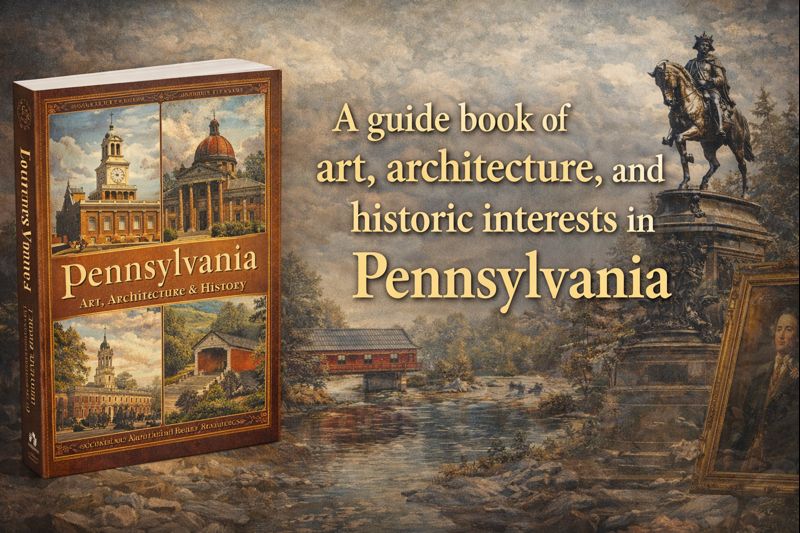
A Guide Book of Art, Architecture, and Historic Interests in Pennsylvania is a cultural and educational work that explores the rich artistic, architectural, and historical heritage of the state of Pennsylvania. Rather than focusing on a single narrative, the book serves as a detailed reference for travelers, students, historians, and art enthusiasts who wish to understand the cultural identity of one of the most historically significant states in the United States.
Pennsylvania has played a central role in American history, from colonial settlement and independence to industrial growth and artistic development. This guidebook captures that legacy through its examination of landmarks, artistic traditions, and architectural achievements.
Purpose and Scope of the Book
The primary purpose of the guidebook is to document and explain Pennsylvania’s most important cultural sites. It combines practical guidance with historical context, allowing readers to appreciate not only where places are located, but why they matter.
The book typically covers:
Historic buildings and monuments
Museums and art collections
Architectural styles across different periods
Cities, towns, and rural heritage sites
Cultural institutions and public spaces
Rather than functioning as a simple travel manual, the guidebook emphasizes education and preservation.
Historical Significance of Pennsylvania
Pennsylvania holds a unique position in American history. Founded by William Penn as a place of religious tolerance, the state became a center of political, economic, and cultural development. Philadelphia, in particular, served as the birthplace of American independence and was home to key events such as the signing of the Declaration of Independence and the drafting of the U.S. Constitution.
The guidebook places strong emphasis on these historical foundations, helping readers understand how Pennsylvania’s past shaped its architecture and artistic identity.
Architecture Across the Centuries
One of the book’s central themes is the diversity of architectural styles found throughout Pennsylvania. From colonial-era structures to industrial buildings and modern designs, the state reflects nearly every major phase of American architectural history.
Colonial and Early American Architecture
The guide highlights early colonial buildings influenced by English, German, and Dutch traditions. Stone farmhouses, meeting houses, and early civic buildings demonstrate practicality, craftsmanship, and community-focused design.
Industrial and Urban Architecture
As Pennsylvania became a center of industry during the 19th century, cities such as Pittsburgh and Philadelphia developed distinctive urban landscapes. Factories, bridges, railways, and worker housing illustrate the relationship between architecture and economic growth.
The guidebook explains how industrialization shaped not only buildings, but entire communities.
Civic and Institutional Buildings
Courthouses, libraries, universities, and government buildings receive special attention. These structures often reflect ideals of democracy, education, and public service through their scale and design.
Artistic Heritage and Cultural Expression
In addition to architecture, the book explores Pennsylvania’s artistic traditions. Museums, galleries, and public art collections showcase painting, sculpture, decorative arts, and folk art.
Pennsylvania is particularly known for:
Early American portraiture
Folk art and crafts
Religious and community-based artistic traditions
Public murals and monuments
The guidebook connects these artistic expressions to the communities and historical moments that produced them.
Historic Sites and Landmarks
The book documents a wide range of historic locations, including:
Revolutionary War sites
Early settlements and historic towns
Religious landmarks
Estates and preserved homes
Each site is presented not just as a destination, but as a story that reflects broader historical movements such as immigration, industrialization, and social reform.
Education, Preservation, and Tourism
A key message of the guidebook is the importance of historic preservation. By educating readers about Pennsylvania’s cultural assets, the book encourages responsible tourism and long-term conservation.
The guide emphasizes that preserving art and architecture is essential for maintaining cultural identity and passing knowledge to future generations.
Cultural Diversity and Regional Identity
Pennsylvania’s cultural richness comes from its diversity. The book highlights regional differences between urban centers, rural communities, and industrial regions. Each area contributes unique traditions, architectural styles, and artistic practices.
This regional approach helps readers appreciate the state as a collection of interconnected yet distinct cultural landscapes.
Why This Guidebook Matters Today
Although rooted in history, the guidebook remains relevant for modern readers. It offers:
Educational value for students and researchers
Practical insight for cultural tourism
Inspiration for preservation efforts
A deeper understanding of American heritage
In an era of rapid development, such works remind readers of the importance of protecting cultural landmarks.
Practical Takeaways
Art and architecture reflect social values and history
Preservation strengthens cultural identity
Understanding place deepens appreciation of history
Cultural tourism benefits education and communities
Final Thoughts
A Guide Book of Art, Architecture, and Historic Interests in Pennsylvania is more than a reference book—it is a cultural map of a historically rich state. By combining historical analysis, artistic appreciation, and architectural insight, the book invites readers to see Pennsylvania as a living record of American development.
For anyone interested in history, art, architecture, or cultural travel, this guidebook provides both knowledge and inspiration.
Disclaimer
This article is an original summary and analysis of A Guide Book of Art, Architecture, and Historic Interests in Pennsylvania. It is intended for educational and informational purposes and does not replace the original work.