
Introduction
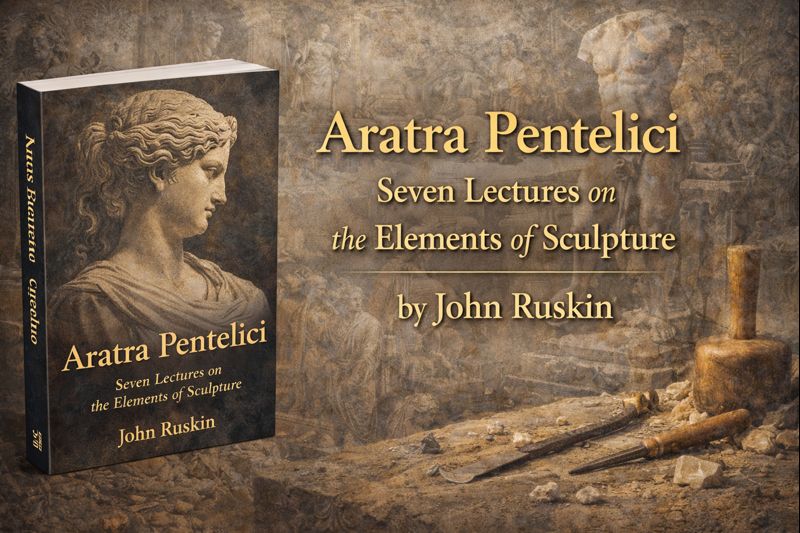
Aratra Pentelici is a foundational work on art theory written by John Ruskin and first published in 1872. The book is composed of seven lectures delivered at Oxford University, where Ruskin served as the Slade Professor of Fine Art. Rather than serving as a technical manual for sculptors, the book explores the moral, philosophical, and aesthetic principles underlying sculpture as an art form.
Ruskin approaches sculpture not merely as a craft, but as a reflection of human values, cultural integrity, and spiritual purpose. His lectures challenge readers to consider why art is created and what it reveals about the society that produces it.
About the Author: John Ruskin
John Ruskin (1819–1900) was an English art critic, writer, and social thinker whose influence shaped Victorian attitudes toward art, architecture, and craftsmanship. He strongly opposed industrial mass production and argued for the moral importance of honest labor and traditional craftsmanship.
Ruskin believed that art was inseparable from ethics. In Aratra Pentelici, he extends this belief to sculpture, arguing that true artistic greatness depends on moral clarity as much as technical skill.
Purpose and Structure of the Book
Aratra Pentelici is structured as seven lectures, each addressing a fundamental aspect of sculpture. The title refers to the marble of Mount Pentelicus in Greece, famously used in classical Greek sculpture and architecture.
Rather than teaching sculptors how to carve stone, Ruskin seeks to teach readers how to see and judge sculpture, emphasizing perception, intention, and meaning.
The lectures focus on:
The nature and purpose of sculpture
The relationship between form and truth
The moral responsibilities of the artist
The cultural role of monumental art
Sculpture as Moral Expression
A central argument of the book is that sculpture reflects the moral condition of a society. Ruskin asserts that great sculpture emerges from cultures that value discipline, faith, and respect for nature.
According to Ruskin, sculpture should embody truth, humility, and reverence. When art becomes focused solely on display or technical brilliance, it loses its spiritual and ethical foundation.
Key idea: Art is a moral language shaped by the values of its creators.
The Importance of Material and Form
Ruskin places strong emphasis on the honest use of materials, particularly stone. He argues that sculptors must respect the natural qualities of the material rather than forcing it into artificial forms.
The title Aratra Pentelici symbolizes Ruskin’s admiration for classical Greek sculpture, which he believed demonstrated harmony between material, form, and intention.
He criticizes excessive ornamentation and over-polishing, viewing them as signs of vanity rather than artistic integrity.
Truth to Nature
One of Ruskin’s most influential principles is truth to nature. He believes sculpture should be grounded in careful observation of the natural world. However, this does not mean literal imitation; instead, the artist should capture the essential character and spirit of natural forms.
Ruskin argues that simplified and restrained representation often communicates deeper truth than exaggerated realism.
Sculpture and Architecture
Ruskin frequently discusses sculpture in relation to architecture, especially in monuments and public buildings. He sees sculpture as an integral part of architectural meaning, not merely decorative detail.
Monumental sculpture, in his view, should serve communal memory and moral instruction rather than personal glorification.
Critique of Modern Art Practices
Ruskin expresses concern over modern approaches to art driven by industrialization and commercial demand. He criticizes mass-produced decorative sculpture, which he believes lacks sincerity and purpose.
According to Ruskin, the loss of craftsmanship reflects broader social and moral decline.
Classical Influence and Greek Ideals
Throughout the lectures, Ruskin refers to ancient Greek sculpture as a model of balance, restraint, and spiritual clarity. He does not advocate copying classical forms, but learning from their principles.
Greek sculpture, in his view, succeeds because it aligns artistic skill with ethical and cultural coherence.
The Role of the Viewer
Ruskin also emphasizes the responsibility of the viewer. Understanding sculpture requires patience, education, and moral sensitivity. Without thoughtful observation, even great art can be misunderstood or reduced to mere decoration.
He encourages audiences to engage with art as a form of dialogue rather than passive consumption.
Cultural and Educational Significance
Aratra Pentelici remains influential in art education because it challenges purely technical definitions of art. It encourages interdisciplinary thinking, linking sculpture to philosophy, ethics, and social responsibility.
The book has influenced generations of artists, architects, and critics who seek meaning beyond surface beauty.
Why the Book Still Matters Today
In a modern world dominated by speed, replication, and commercial design, Ruskin’s ideas remain relevant. His insistence on craftsmanship, honesty, and moral purpose speaks directly to contemporary debates about art and authenticity.
Practical Takeaways for Modern Readers
Art reflects cultural and moral values
Respect for materials leads to stronger design
Simplicity can convey deeper truth
Artistic skill must be guided by ethical intent
Final Thoughts
Aratra Pentelici: Seven Lectures on the Elements of Sculpture is not an easy or casual read, but it is a deeply rewarding one. John Ruskin offers a vision of art that demands responsibility, sincerity, and thoughtfulness from both creators and viewers.
The book stands as a reminder that sculpture is not merely shaped stone—it is shaped belief, discipline, and cultural memory.
Disclaimer
This article is an original summary and analysis of Aratra Pentelici by John Ruskin. It is intended for educational and informational purposes and does not replace the original lectures or text.