
Introduction
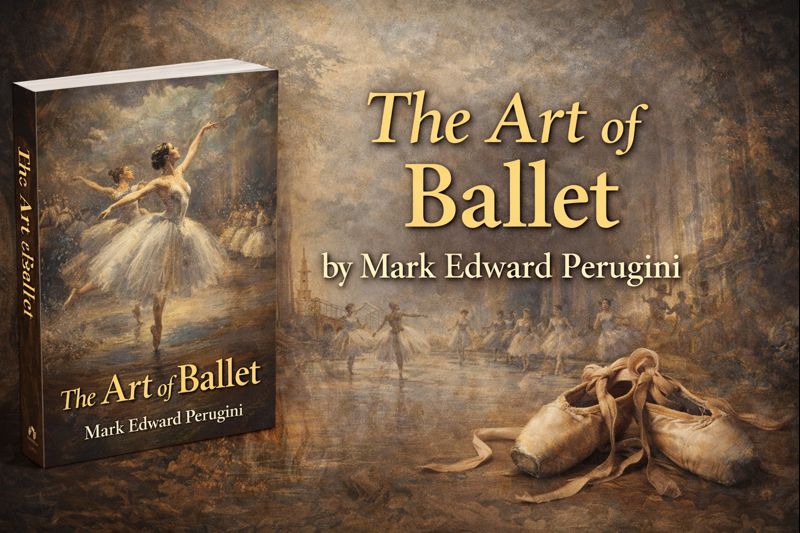
The Art of Ballet by Mark Edward Perugini is a visually rich and educational exploration of ballet as one of the most refined and expressive performing arts in the world. The book examines ballet not merely as a form of dance, but as a complex artistic discipline that combines movement, music, storytelling, discipline, and emotional expression.
Through detailed explanations and visual emphasis, Perugini presents ballet as a living art form shaped by centuries of tradition while continuing to evolve in the modern world. The book is suitable for dancers, students, art enthusiasts, and anyone interested in understanding the beauty and discipline behind ballet.
About the Author: Mark Edward Perugini
Mark Edward Perugini is an author and visual artist known for creating educational works that combine art history with visual storytelling. His approach emphasizes accessibility, making complex artistic subjects understandable to general audiences. In The Art of Ballet, Perugini uses imagery and structured commentary to communicate both the technical and emotional dimensions of ballet.
Purpose and Structure of the Book
The primary goal of The Art of Ballet is to introduce readers to the aesthetic, technical, and cultural foundations of ballet. Rather than focusing on a single historical narrative, the book presents ballet as a multi-layered art form.
The book typically explores:
The origins and development of ballet
Classical ballet techniques and positions
The role of dancers, choreography, and training
The relationship between ballet, music, and costume
Ballet as visual and emotional storytelling
This structure allows readers to appreciate ballet both intellectually and visually.
The Origins and Evolution of Ballet
The book traces ballet’s origins to the royal courts of Renaissance Italy and France, where dance was used as a form of entertainment and political display. Over time, ballet evolved into a formalized art with standardized techniques and vocabulary.
Perugini explains how ballet gradually moved from court performances to professional theaters, becoming a highly disciplined art form. The development of classical ballet in France and Russia played a major role in shaping modern ballet traditions.
Technique and Discipline
One of the central themes of the book is the discipline required to master ballet. Ballet dancers undergo years of rigorous training to achieve precision, balance, strength, and grace. Every movement, from a simple step to a complex leap, follows strict technical principles.
The book highlights:
Body alignment and posture
Balance and control
Strength combined with elegance
The importance of repetition and practice
Perugini emphasizes that what appears effortless on stage is the result of intense physical and mental dedication.
The Role of the Ballet Dancer
The Art of Ballet presents dancers as both athletes and artists. While physical strength and endurance are essential, dancers must also convey emotion, narrative, and character through movement.
The book explores how dancers use facial expression, posture, and timing to communicate feelings such as joy, sorrow, love, and conflict—often without speaking a single word.
Key idea: Ballet is a language of movement that speaks directly to emotion.
Choreography and Storytelling
Another important focus of the book is choreography, the art of designing movement. Choreographers transform music into motion, creating sequences that tell stories or express abstract ideas.
Perugini explains how choreography balances structure and creativity. Classical ballets often follow established forms, while modern ballet experiments with new styles and themes.
Ballet storytelling can be narrative, as in traditional story ballets, or symbolic, allowing audiences to interpret meaning freely.
Music, Costume, and Stage Design
The book highlights ballet as a collaborative art form. Music provides rhythm and emotional tone, while costumes and stage design enhance visual impact.
Costumes are designed to support movement while reflecting character and era. Lighting and scenery create atmosphere and help guide the audience’s focus.
Together, these elements transform dance into a complete theatrical experience.
Ballet as Visual Art
A defining feature of The Art of Ballet is its emphasis on ballet as visual art. Poses, lines, and symmetry are treated with the same care as painting or sculpture. Each position is designed to be aesthetically pleasing from the audience’s perspective.
The book encourages readers to view ballet performances as moving works of art, where every moment is carefully composed.
Modern Ballet and Artistic Evolution
While rooted in tradition, ballet continues to evolve. The book acknowledges modern influences that have expanded ballet’s themes, music, and movement styles.
Contemporary ballet often addresses modern emotions and social ideas while maintaining classical technique. This balance between tradition and innovation keeps ballet relevant in today’s artistic world.
Cultural and Artistic Significance
Perugini presents ballet as a universal art form that transcends language and culture. Ballet companies around the world adapt classical traditions while adding regional influences.
The book highlights ballet’s role in preserving artistic heritage while inspiring creativity across generations.
Practical Takeaways for Readers
Ballet combines physical discipline with emotional expression
Artistic beauty often comes from structure and repetition
Collaboration enhances creative performance
Movement can communicate meaning without words
Final Thoughts
The Art of Ballet by Mark Edward Perugini offers a thoughtful and visually engaging introduction to one of the world’s most elegant art forms. By exploring technique, history, and artistic expression, the book deepens appreciation for the dedication behind every ballet performance.
Whether read by dancers, students, or art lovers, the book reinforces the idea that ballet is not merely entertainment—it is a timeless artistic language shaped by discipline, beauty, and human emotion.
Disclaimer
This article is an original summary and analysis of The Art of Ballet by Mark Edward Perugini. It is intended for educational and informational purposes and does not replace the original book.