
Introduction
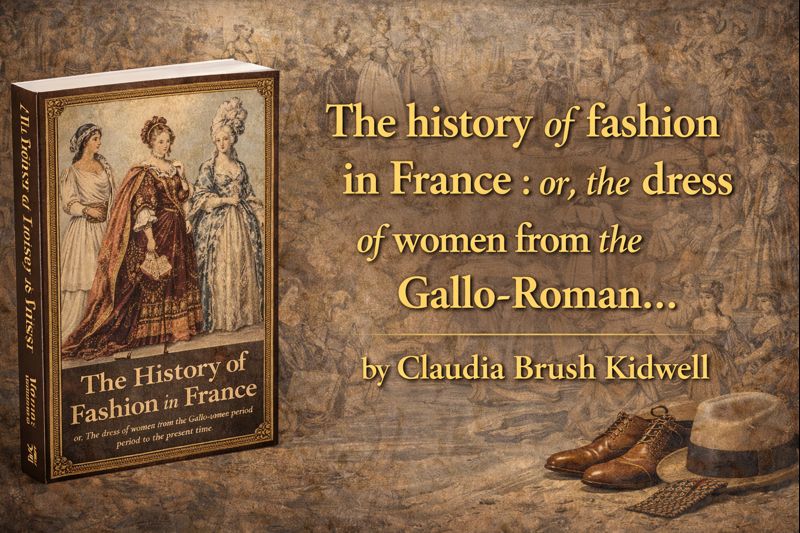
The History of Fashion in France: or, The Dress of Women from the Gallo-Roman Period to the Present Time is a comprehensive historical study that traces the evolution of women’s clothing in France across many centuries. The book presents fashion not as a superficial trend, but as a cultural, social, and artistic expression shaped by politics, economics, religion, and changing ideas about femininity.
France has long been regarded as a global center of fashion, and this work explains how that reputation developed gradually through historical transformation rather than sudden innovation.
Purpose and Historical Scope
The primary purpose of the book is to document how women’s dress in France evolved from ancient times through the medieval period, the Renaissance, and into the modern age. By examining clothing styles chronologically, the book demonstrates how fashion reflects social hierarchy, artistic taste, and cultural values.
The book covers:
Ancient and early medieval dress
Court fashion and aristocratic influence
The role of monarchy and nobility
Changes in materials, tailoring, and decoration
The emergence of France as a fashion authority
Rather than isolating fashion from history, the book integrates dress with broader social change.
Gallo-Roman Dress and Classical Influence
The earliest section focuses on the Gallo-Roman period, when Roman culture influenced clothing in what is now France. Women’s dress during this era emphasized simplicity, draped garments, and natural body lines.
Typical features included:
Tunics and robes
Draped fabrics inspired by Roman styles
Minimal tailoring
Functional and symbolic accessories
Clothing reflected Roman ideals of balance, modesty, and civic identity. Dress served both practical and cultural purposes, signaling status and belonging within Roman society.
Early Medieval Fashion
Following the fall of the Roman Empire, fashion became more regional and less uniform. The book explains how clothing during the early Middle Ages was influenced by climate, limited resources, and social instability.
Women’s dress became heavier and more layered, emphasizing protection and modesty. Decorative elements were limited, and garments were often handmade using wool and linen.
Religion played a major role in shaping ideas about proper appearance, encouraging modest dress and discouraging excess.
High Middle Ages and Social Identity
As European society stabilized, fashion began to reflect social rank and identity more clearly. The book shows how clothing distinguished nobility from common people through fabric quality, color, and ornamentation.
Key developments included:
Improved tailoring techniques
Use of dyes and embroidery
Emergence of fitted garments
Clear separation between social classes
Dress laws regulated what women could wear, reinforcing hierarchy and moral values.
The Renaissance and Artistic Influence
The Renaissance marked a major transformation in women’s fashion. Inspired by renewed interest in art, humanism, and classical beauty, clothing became more structured, decorative, and expressive.
French women’s dress during this period featured:
Rich fabrics such as silk and velvet
Elaborate embroidery and ornamentation
Structured bodices and layered skirts
Influence from Italian Renaissance courts
Fashion became a visual expression of wealth, taste, and intellectual sophistication.
The Role of the French Court
A central theme of the book is the influence of the French royal court on fashion. Queens, noblewomen, and court officials set trends that spread throughout Europe.
Clothing at court was designed to display power, elegance, and political authority. Fashion became an instrument of influence, reinforcing France’s cultural leadership.
The Seventeenth and Eighteenth Centuries
During the reigns of powerful monarchs, French fashion became increasingly elaborate. The book describes how women’s dress evolved into highly structured and decorative forms.
Features included:
Corsetry and structured silhouettes
Large skirts and decorative panniers
Luxurious fabrics and lace
Intricate hairstyles and accessories
Fashion reflected both artistic ambition and social rigidity, emphasizing status and refinement.
Fashion and Social Change
The book emphasizes that fashion does not exist in isolation. Political events such as revolutions, economic shifts, and cultural movements directly influenced women’s dress.
Periods of social upheaval often resulted in simpler styles, while times of stability encouraged extravagance.
Toward Modern Fashion
As France moved toward modernity, women’s clothing gradually became more practical and individualized. The book highlights how fashion adapted to changing roles for women, including increased public presence and education.
Tailoring improved, materials diversified, and fashion became more responsive to personal expression rather than rigid class rules.
France as a Global Fashion Authority
One of the book’s key arguments is that France’s dominance in fashion developed through centuries of artistic excellence, craftsmanship, and cultural prestige.
Paris eventually emerged as the center of fashion innovation, influencing designers, consumers, and industries worldwide.
Cultural and Artistic Significance
The book demonstrates that women’s dress serves as a historical document. Clothing reveals attitudes toward beauty, morality, gender roles, and power.
By studying fashion history, readers gain insight into how societies view women and how those views evolve over time.
Why This Book Still Matters
The History of Fashion in France remains relevant because it provides:
A long-term perspective on fashion evolution
Cultural context for modern style
Insight into gender and social history
Understanding of France’s fashion leadership
It helps modern readers see fashion as a serious cultural force rather than a fleeting trend.
Practical Takeaways for Modern Readers
Fashion reflects cultural and political values
Clothing communicates identity and status
Artistic movements influence style
Studying fashion history deepens cultural understanding
Final Thoughts
The History of Fashion in France: or, The Dress of Women from the Gallo-Roman Period to the Present Time offers a rich and detailed exploration of how women’s clothing evolved alongside French civilization. By tracing fashion across centuries, the book reveals how art, power, and society shape personal appearance.
It stands as an essential reference for students of fashion, history, art, and cultural studies, and confirms France’s lasting influence on the global fashion landscape.
Disclaimer
This article is an original summary and historical analysis of The History of Fashion in France. It is intended for educational and informational purposes and does not replace the original book.