
Introduction
Twenty Thousand Leagues Under the Sea is a classic science-fiction and adventure novel written by Jules Verne and first published in 1870. The novel is widely regarded as one of the earliest examples of science fiction, combining scientific imagination with thrilling adventure. Set beneath the world’s oceans, the story explores themes of discovery, isolation, freedom, and the complex relationship between humanity and technology.
Although the novel is filled with action and wonder, it also raises philosophical questions about power, revenge, and the cost of absolute independence.
About the Author: Jules Verne
Jules Verne (1828–1905) was a French novelist best known for his pioneering works of science fiction. His writing often blended real scientific knowledge with speculative ideas far ahead of his time. Verne accurately predicted technologies such as submarines, space travel, and underwater exploration. Twenty Thousand Leagues Under the Sea remains one of his most influential and enduring works.
Book Overview
The novel begins with reports of a mysterious sea creature attacking ships across the oceans. Governments and scientists believe it to be a giant sea monster. Professor Pierre Aronnax, a marine biologist, joins an expedition to investigate the phenomenon. Accompanied by his loyal assistant Conseil and a skilled harpooner named Ned Land, Aronnax sets sail aboard a warship.
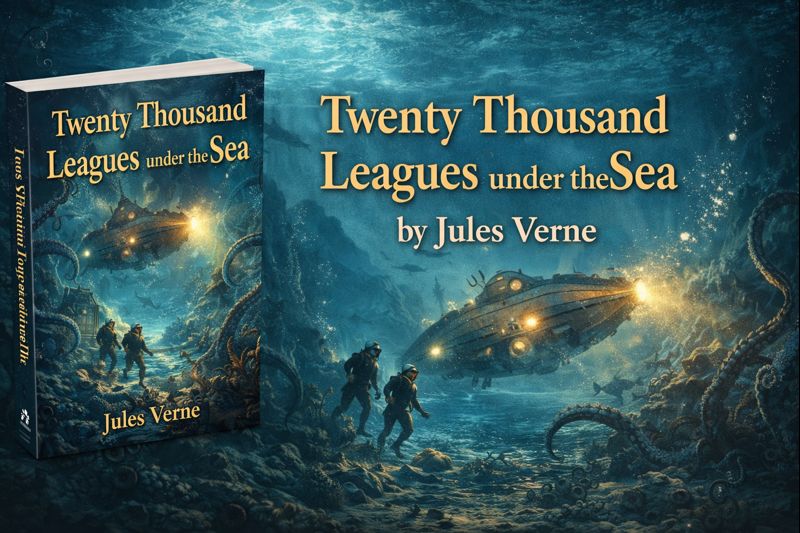
During the expedition, the group encounters the “monster,” which turns out to be an advanced submarine called the Nautilus, commanded by the enigmatic Captain Nemo. After being captured, Aronnax and his companions are forced to live aboard the Nautilus as it travels beneath the seas.
Major Characters
Professor Pierre Aronnax
Aronnax is the narrator of the story and a passionate scientist. He is fascinated by the ocean and Captain Nemo’s technology. Unlike Ned Land, Aronnax is willing to sacrifice freedom in exchange for knowledge and discovery.
Captain Nemo
Captain Nemo is one of the most complex characters in literature. Brilliant, mysterious, and deeply troubled, he has rejected society and lives entirely underwater. Nemo uses the sea as both a refuge and a weapon against the nations he despises.
Ned Land
Ned Land is a practical and strong-willed harpooner who values freedom above all else. He constantly seeks escape from the Nautilus and represents humanity’s desire for independence and connection to the surface world.
Conseil
Conseil is Aronnax’s calm and loyal assistant. He is methodical, obedient, and deeply respectful of classification and order. His character adds humor and balance to the group.
Key Themes
1. Science and Discovery
The novel celebrates scientific curiosity and exploration. Jules Verne provides detailed descriptions of marine life, underwater landscapes, and technological innovation. Through Aronnax, readers experience the wonder of discovering a hidden world beneath the sea.
Key idea: Knowledge expands human understanding, but it can also isolate those who possess it.
2. Isolation and Freedom
Captain Nemo chooses isolation as a form of freedom. By abandoning the surface world, he escapes laws, governments, and social constraints. However, his freedom comes at the cost of loneliness and emotional suffering.
Lesson: Absolute freedom without human connection can become a prison.
3. Revenge and Moral Conflict
Nemo’s hatred toward certain nations suggests a tragic past filled with loss and injustice. While he uses the Nautilus to explore and protect the sea, he also uses it for violent revenge, raising moral questions about justice and vengeance.
4. Humanity vs. Nature
Although the Nautilus allows humans to dominate the ocean, the novel repeatedly reminds readers of nature’s immense power. Storms, sea creatures, and deep-sea dangers demonstrate that technology can never fully control the natural world.
Journey Beneath the Sea
Throughout the voyage, the Nautilus travels through coral reefs, underwater forests, polar ice caps, and sunken ruins. The crew encounters giant squids, explores lost civilizations, and witnesses both the beauty and terror of the deep ocean.
These adventures highlight the dual nature of the sea—both a source of wonder and a place of danger.
Climax and Resolution
As the story progresses, Captain Nemo becomes increasingly unstable. His isolation and unresolved anger begin to dominate his actions. Ned Land becomes desperate to escape, fearing they may never return to the surface.
In the novel’s dramatic conclusion, the Nautilus is caught in a powerful ocean whirlpool. Aronnax, Conseil, and Ned Land manage to escape, but Captain Nemo and the fate of the Nautilus remain uncertain.
Practical Takeaways
Scientific progress must be guided by ethical responsibility
Isolation can protect, but it can also destroy
Curiosity drives innovation, but obsession limits perspective
Technology should serve humanity, not replace it
Final Thoughts
Twenty Thousand Leagues Under the Sea remains a masterpiece because it combines thrilling adventure with deep philosophical reflection. Jules Verne’s vision of underwater exploration continues to inspire scientists, writers, and readers alike.
The novel invites readers to admire technological progress while questioning its emotional and moral consequences. It is both a celebration of human imagination and a cautionary tale about the price of withdrawing from the world.
Disclaimer
This article is an original summary and analysis of Twenty Thousand Leagues Under the Sea by Jules Verne. It is intended for educational and informational purposes and does not replace reading the original book.