
Introduction
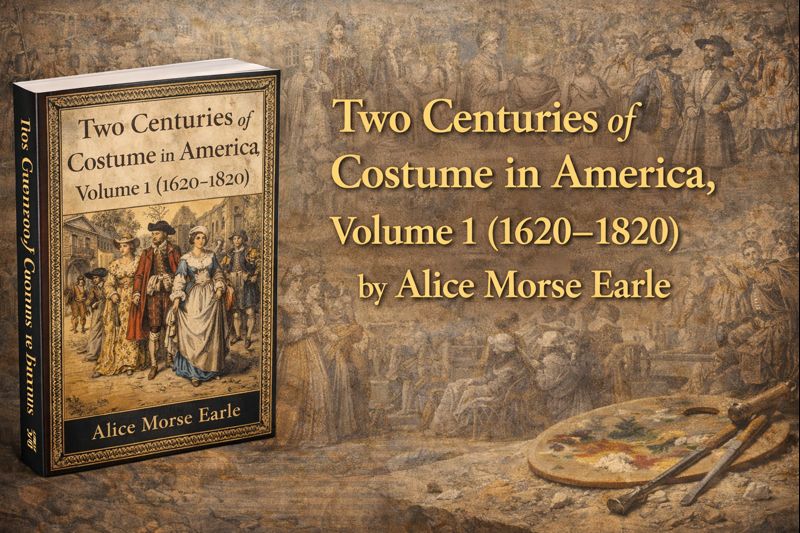
Two Centuries of Costume in America, Volume 1 (1620–1820) by Alice Morse Earle is a detailed historical study of clothing and fashion in early American society. Rather than treating costume as a superficial subject, the book presents clothing as a powerful cultural record that reflects social class, moral values, economic conditions, and daily life over two formative centuries in American history.
Covering the period from the arrival of early settlers to the early years of the American republic, the book reveals how fashion evolved alongside political change, cultural influence, and shifting ideas of identity.
About the Author: Alice Morse Earle
Alice Morse Earle (1851–1911) was an American historian and writer known for her studies of colonial and early American life. She specialized in social history, focusing on domestic customs, clothing, and everyday experiences rather than major political events.
Earle’s strength lies in her ability to combine historical research with vivid description, making past societies understandable and engaging for modern readers.
Purpose and Scope of the Book
The primary goal of the book is to document how Americans dressed and what their clothing revealed about society. Earle treats costume as a reflection of morality, occupation, religion, and status.
The book examines:
Men’s, women’s, and children’s clothing
Regional and class differences
Materials, tailoring, and accessories
The influence of European fashion
Changes in taste from colonial to post-Revolutionary America
Rather than offering fashion illustrations alone, the book provides context and interpretation.
Early Colonial Dress (1620–1700)
The book begins with the clothing of early settlers, particularly the Puritans and other European colonists. Clothing during this period was primarily practical, modest, and influenced by religious beliefs.
Key features of early colonial dress included:
Dark, muted colors
Simple cuts and minimal decoration
Heavy fabrics suitable for labor and climate
Emphasis on modesty and discipline
Clothing reflected moral values, especially among Puritan communities, where fashion was closely regulated.
Materials and Craftsmanship
Earle explains how limited resources shaped early American clothing. Most garments were handmade using wool, linen, and leather. Clothing was durable, repaired frequently, and often passed down through generations.
Tailoring was a skilled craft, and garments were valued possessions rather than disposable items.
Dress and Social Hierarchy
Even in early America, clothing signaled social status. Wealthier individuals could afford finer fabrics, brighter colors, and imported accessories, while poorer citizens wore simpler garments.
Sumptuary laws and social expectations controlled how people dressed, reinforcing class distinctions even in a society that valued equality.
18th-Century Fashion and European Influence
As trade increased, American fashion became more closely aligned with European styles, especially those from England and France. The 18th century saw increased elegance, ornamentation, and variety in clothing.
Features of this period included:
Powdered wigs and elaborate hairstyles
Decorative embroidery and lace
Tailored coats and waistcoats
Structured dresses and corsetry
Clothing became a way to express refinement, education, and social aspiration.
Men’s, Women’s, and Children’s Dress
Earle carefully documents differences in dress based on gender and age. Men’s clothing emphasized authority and professionalism, while women’s fashion balanced beauty with social expectations of modesty.
Children were often dressed as miniature adults, reflecting beliefs about discipline and upbringing.
Clothing During the Revolutionary Period
The American Revolution brought significant changes to fashion. Political identity began to influence dress, with simpler styles symbolizing independence and rejection of British luxury.
Homespun fabrics became symbols of patriotism, and clothing reflected emerging national identity.
Post-Revolutionary and Early Republic Fashion (1780–1820)
After independence, American fashion evolved again, influenced by neoclassical ideals. Clothing became lighter, simpler, and inspired by ancient Greek and Roman styles.
This shift reflected new values emphasizing democracy, reason, and natural beauty.
Accessories and Personal Adornment
The book also explores accessories such as hats, shoes, gloves, jewelry, and outerwear. These items completed outfits and further communicated status and personality.
Even small details carried social meaning.
Cultural and Historical Significance
Earle demonstrates that costume history is social history. Clothing reveals:
Economic conditions
Gender roles
Religious values
Cultural aspirations
Through fashion, readers gain insight into how Americans understood themselves during a period of national formation.
Why This Book Still Matters
Two Centuries of Costume in America remains relevant because it humanizes history. By focusing on everyday dress, the book connects readers to the lived experience of the past.
It is valuable for historians, designers, students, and anyone interested in American cultural identity.
Practical Takeaways for Modern Readers
Fashion reflects values and beliefs
Clothing communicates identity and status
Cultural change appears first in daily life
Studying dress deepens historical understanding
Final Thoughts
Two Centuries of Costume in America, Volume 1 (1620–1820) is a richly detailed exploration of how Americans dressed during two centuries of profound change. Alice Morse Earle reveals fashion as a mirror of society, offering insight into morality, economy, and national identity.
The book stands as an essential resource for understanding early American life through the lens of clothing.
Disclaimer
This article is an original summary and historical analysis of Two Centuries of Costume in America, Volume 1 (1620–1820) by Alice Morse Earle. It is intended for educational and informational purposes and does not replace the original book.