
Introduction
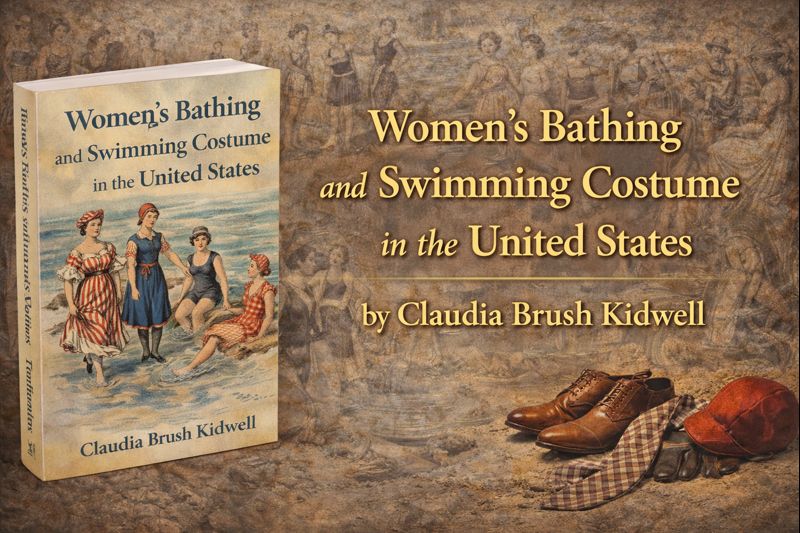
Women’s Bathing and Swimming Costume in the United States by Claudia Brush Kidwell is a detailed historical study that traces the evolution of women’s swimwear from the early nineteenth century to the modern era. The book goes beyond fashion to explore how bathing and swimming costumes reflect changing attitudes toward modesty, health, gender roles, recreation, and women’s freedom in American society.
By examining garments worn at beaches, resorts, and swimming facilities, Kidwell reveals how clothing became a site of cultural debate and social transformation.
About the Author: Claudia Brush Kidwell
Claudia Brush Kidwell (1941–2018) was an American curator, fashion historian, and scholar associated with the Smithsonian Institution. She specialized in the study of dress as a reflection of social change, particularly women’s clothing.
Her research combines material culture, historical documentation, and cultural analysis, making her work authoritative and widely respected in the field of costume history.
Purpose and Scope of the Book
The book aims to document how women’s bathing and swimming costumes developed in response to social norms, technological innovation, and changing ideas about women’s bodies and public behavior.
Key areas of focus include:
Early bathing practices and modesty standards
The influence of health and recreation movements
The role of technology and textile innovation
Social controversy surrounding women’s swimwear
The relationship between clothing and female autonomy
Rather than focusing only on design, Kidwell places swimwear within its broader cultural context.
Early Bathing Practices in the United States
In the early 19th century, bathing was primarily associated with health rather than leisure. Sea bathing was promoted for its supposed medical benefits, especially for women.
Bathing costumes during this period were heavy, loose, and concealing, often resembling everyday dresses. These garments were designed to protect modesty rather than allow ease of movement.
Common features included:
Long sleeves and skirts
Dark, heavy fabrics
Separate stockings and shoes
Swimming was not yet considered appropriate for women, and bathing was usually done privately or with strict supervision.
Victorian Modesty and Social Control
During the Victorian era, ideas about femininity and morality strongly influenced women’s swimwear. The female body was considered something to be concealed, and public exposure—even at the beach—was tightly regulated.
Kidwell explains how bathing machines, gender-segregated beaches, and strict dress codes reinforced social control. Swimwear was designed to limit visibility and physical freedom.
Key idea: Early swimwear reflected fear of female visibility and autonomy rather than concern for comfort or performance.
The Rise of Recreational Swimming
By the late 19th and early 20th centuries, attitudes toward swimming began to change. Swimming became recognized as a healthy form of exercise, and women increasingly participated in water activities.
As a result, bathing costumes slowly evolved:
Skirts became shorter
Sleeves were reduced or removed
Fabrics became lighter and more flexible
However, these changes were often met with resistance, and women who wore more practical suits sometimes faced public criticism or legal consequences.
Social Debate and Moral Panic
Kidwell documents how women’s swimwear became a subject of moral debate. Newspapers, local authorities, and social reformers often argued over what constituted “proper” attire.
In some cases, women were fined or arrested for wearing swimsuits considered too revealing. These controversies highlight how clothing functioned as a battleground for broader issues such as women’s independence and bodily autonomy.
The Influence of Sports and Competition
The emergence of competitive swimming played a crucial role in transforming women’s swimwear. Athletic performance required streamlined designs that allowed freedom of movement.
Swimwear gradually shifted from decorative garments to functional athletic clothing. This transition challenged traditional ideas about femininity and reshaped public perceptions of women’s physical capability.
Technological Advances in Fabric and Design
One of the most important factors in swimwear evolution was the development of new materials. The introduction of elastic fabrics, improved knitting techniques, and lighter textiles allowed for more form-fitting designs.
Kidwell explains how technology enabled designers to balance modesty, comfort, and performance, accelerating change in women’s swimwear.
Changing Body Ideals and Media Influence
As swimwear became more revealing, cultural attitudes toward the female body also shifted. Media, advertising, and popular culture played a role in shaping ideals of beauty, fitness, and femininity.
The book explores how swimwear both reflected and influenced body standards, creating new expectations for women’s appearance in public spaces.
Swimwear and Women’s Liberation
Kidwell connects the evolution of swimwear to broader movements for women’s rights. Increased freedom in clothing paralleled greater participation in sports, education, and public life.
More practical swimwear symbolized women’s growing claim to physical freedom and personal agency.
Cultural and Historical Significance
The book demonstrates that bathing and swimming costumes are not trivial fashion items. They serve as historical evidence of:
Gender norms and restrictions
Social attitudes toward the body
Technological progress
Women’s changing roles in society
By studying swimwear, readers gain insight into larger patterns of social change.
Why This Book Still Matters
Women’s Bathing and Swimming Costume in the United States remains relevant today because debates over women’s clothing, body image, and public behavior continue.
The book provides historical context that helps explain why clothing choices still carry cultural meaning and controversy.
Practical Takeaways for Modern Readers
Clothing reflects social power and control
Fashion evolves alongside women’s rights
Technology shapes personal freedom
Dress history reveals hidden cultural tensions
Final Thoughts
Claudia Brush Kidwell’s Women’s Bathing and Swimming Costume in the United States offers a compelling exploration of how women’s swimwear evolved from restrictive garments to symbols of movement, health, and autonomy. By situating fashion within its social and historical context, the book shows how even specialized clothing can reveal deep truths about culture and identity.
It is an essential resource for understanding the intersection of fashion, gender, and social change in American history.
Disclaimer
This article is an original summary and historical analysis of Women’s Bathing and Swimming Costume in the United States by Claudia Brush Kidwell. It is intended for educational and informational purposes and does not replace the original book.